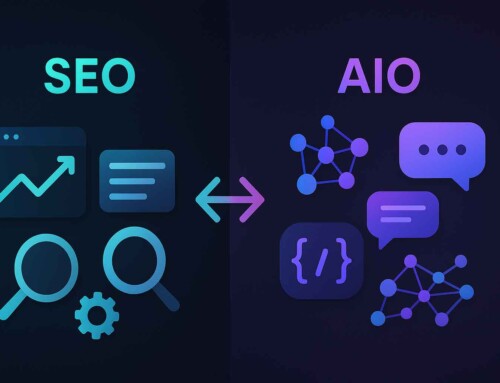
A strong search intention is crucial!
Strong search intent is key – here’s why!
Whenever we search for something on Google, it’s always for a reason. We want to know where a shop is located, how long your favorite restaurant is open?
Search Intent vs. User Intent – Understand the difference and use it for your search engine optimization!
The search intention describes the intention behind a search query. It is also referred to as “search intent” in English. In addition, there is also the “user intention” (user intent), which describes the overriding (prior) motivation behind the search query.
So the order is:
- User intention (motivation)
- Search Intent (Intention)
- Search query (as a result of the two intentions)
So there is a difference between the two terms – but only a very subtle one.
The search itself is the result of the intention chain. The search intention describes the specific intention that the searcher has with his search. Search intentions are always a reaction to a previous motivation – i.e. the user intention.
For the e-commerce sector, it is important to know what the search intent is behind a search. Because depending on what the intention is, the target page of the searcher must also be designed accordingly.
The Search Intention Model: A Key to Success in the Online World?
Kurz gesagt: Ja!
Das Suchintention Modell ist ein Schlüssel zum Erfolg in der Online-Welt. Es hilft Ihnen, die Absichten Ihrer Website Besucher zu verstehen. Dieses Wissen ist wertvoll, weil es Ihnen ermöglicht, Ihre Website und Ihren Content zu gestalten. Ihre Website sollte den Bedürfnissen Ihrer Besucher entsprechen.
Das Suchintention Modell teilt die Absichten von Suchenden in drei Hauptkategorien ein.
- Informational: Die Informationssuche
Die Informational Intention ist die häufigste Art von Suche. Hier suchen Menschen nach Informationen – häufig nach Antworten auf Fragen. Beispielsweise könnte jemand nach „Wie mache ich einen perfekten Margarita?“ oder „Welche Länder machen beim Eurovision Song Contest mit?“ suchen. - Transaktional: Die Suche nach einem Kauf oder einer Bestellung.
Bei der transaktionalen Suche geht es darum, etwas zu kaufen oder zu bestellen. Beispielsweise könnte jemand nach „iPhone 6s Plus Preis“ oder „Pizza Lieferservice München“ suchen. - Navigational: Die Suche nach einer bestimmten Website oder einem bestimmten Ort
Die navigationale Suche ist die Suche nach einer bestimmten Website oder einem bestimmten Ort. Beispielsweise könnte jemand nach „Facebook“ oder „Flughafen München“ suchen.
The new search intention model from Google – finally a better overview when searching!
Google’s new search intent model divides search queries into four categories: know, do, go, and buy. This model is a little newer and could be the key to success in Google searches. So far, Google has always tried to guess the search intentions of users.
The new model should now make it possible to make the search even more precise and personalized. The aim is to show the searcher exactly what he is looking for. It doesn’t matter whether it’s information (Know), instructions for action (Do), products or services (Buy) or nearby places (Go).
This model is developed on the basis of machine learning and is intended to continuously improve over time. With this approach, Google would like to support smaller companies that previously had no chance against large competitors.
This is how you determine the search intention of your users and thus increase your conversion rate!
Your website is like a business. It has an offer, a location and customers who want to buy or download something. Knowing what your customers want and what they are looking for is crucial for online marketing. These two factors significantly influence the conversion rate of your website.
For more conversion rate facts, check out our blog article .
The search for products or services on the Internet usually begins with a search intention. That is, the seeker has a problem or need. The user wants to solve this using Google or another search engine .
So if you know what search intention your customers have, you can adapt your website to their needs. This not only increases the chance that they will get to your site. The probability that they will ultimately buy or download them also increases.

Tips and tricks for determining search intent
- Check the rankings of your keywords in the search engines
You can get a good overview of search intent by looking at keyword rankings in search engines. Example: You have a travel company and a certain keyword ranks high for the search “cheap travel”. Then it is likely that many seekers will look for cheap deals.
- Take a closer look at the search terms.
You should look at the actual search terms (queries) that users use to reach your site. These can give you more information about the intentions of the searcher.
- Use Google Analytics for further insights
Google Analytics is a free tool from Google. This tool gives you detailed analysis of the visitors to your website. Below you will also find information about the intentions of the seekers.